
A dog life jacket is a practical piece of safety gear for pups joining their people near pools, beaches, rivers or boats. Even dogs that appear comfortable in water can tire, become unsettled by waves or currents, or struggle to find a safe exit point. The right vest is not a substitute for supervision, training or sound judgement, but it can provide added flotation and make your dog easier to see while you stay close by.
This guide explains what to consider before buying a pet life jacket for dogs, how to check the fit and how to use it thoughtfully. For water-ready pet gear and outdoor essentials, start with Nola Outdoor.
When should a dog wear a life jacket?
A buoyancy vest can be sensible whenever the conditions may be more demanding than a short, calm paddle. It is especially worth considering for boating, kayaking, paddleboarding, visits to unfamiliar waterways and beach days with waves or changing conditions.
It may also be useful for dogs that are still building water confidence, have a compact or heavy body shape, are young or older, or simply tire quickly. Breed alone does not decide whether a dog can swim safely. Individual fitness, confidence, coat weight when wet, water temperature and the environment all matter.
Importantly, a life jacket does not make a dog safe to leave unattended around water. Keep your dog within reach where possible, use a lead when local rules and circumstances call for one, and choose a location with a safe, easy way to get out of the water.
What to look for in a dog life jacket
There is no single best dog swimming vest for every pet. Start with your planned activity and your dog’s measurements, then compare the details that affect comfort and control. Browse the available options in Nola Outdoor’s Life Jackets collection to see the different styles available.
Fit comes before appearance
A vest needs to sit securely without restricting normal movement or breathing. Measure your dog according to the product’s sizing guidance rather than assuming a familiar clothing size will translate. Chest girth, back length and neck measurements are commonly important, and a dog’s shape can matter as much as its weight.
Once the vest is on, check that you can comfortably slide fingers beneath the straps without leaving excessive looseness. Your dog should be able to stand, sit and walk naturally. Watch for rubbing around the front legs, pressure at the neck or a vest that twists around the body.
Buoyancy and balanced support
Look for flotation material positioned to support the body in water. A well-fitted vest should help rather than force an awkward posture. Since dogs move differently and carry weight differently, the best way to assess suitability is a calm, closely supervised test in shallow water.
Do not assume that extra bulk automatically means a better outcome. A vest that is too large, poorly positioned or uncomfortable may be less useful than one matched carefully to the dog.
A secure handle for short assistance
Many pet life jackets include a top handle. This can be helpful for steadying a dog while getting into or out of a boat, assisting at the edge of a pool, or giving brief support in shallow water. It is not a reason to lift a dog for long periods unless the product guidance specifically supports that use and you can do so safely.
Practise using the handle on dry land first. Support your dog’s body appropriately and avoid sudden lifts that could make them anxious or place strain on either of you.
Visibility in changing conditions
Bright colours and distinctive design details can help you keep track of your dog against water, sand, vegetation or a busy shoreline. Visibility is useful, but it should sit alongside active supervision rather than replace it. In low light, poor weather or busy waterways, move closer and reduce risk rather than relying on colour alone.
Comfort and adjustment
Adjustable straps allow you to refine the fit, while a design that leaves room for the front legs can support more natural movement. Check closures before every outing and inspect the vest after use for wear, damage or trapped sand and debris. Rinse and dry it in line with its care instructions.
An example from the Nola Outdoor range
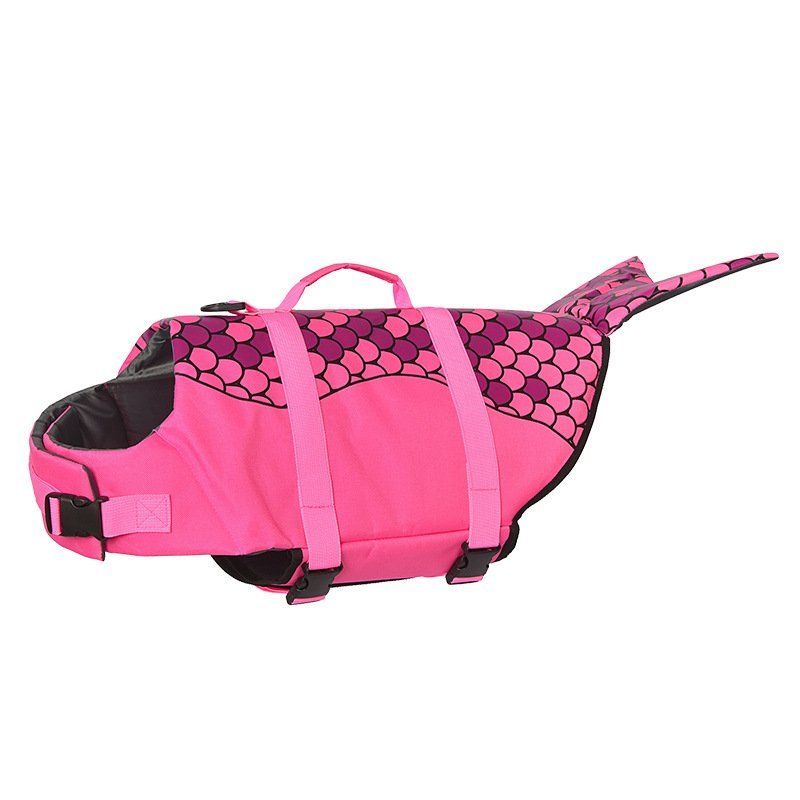
If you are shopping for a smaller dog and prefer a highly visible, playful look, consider the Size XS Pink Scale Pattern Pet Life Jacket for Dogs – Summer Swimming Safety Vest with Shark Fin as one example to assess.
This model is described as a pet life jacket for summer swimming and features high-density EPE foam for flotation. Its pink scale pattern and shark-fin design may make it easier to spot than a muted-colour vest in suitable daylight conditions. The product is presented in Size XS, so careful measurement and a fit check are essential before deciding whether it is appropriate for your dog.
The shark-fin detail is a style feature, not a safety feature on its own. Prioritise the sizing information, strap adjustment, freedom of movement and your dog’s response to the vest. If Size XS is not right, return to the broader Life Jackets category to compare other options.
How to measure and fit a dog swimming vest
- Measure before ordering. Use a soft tape measure and record the measurements requested in the product information. Measure while your dog is standing naturally.
- Start with a calm introduction. Let your dog sniff the vest, then put it on briefly indoors. Use a relaxed voice and reward calm behaviour if that suits your usual training approach.
- Adjust each fastening. Secure the vest so it is snug but not tight. Check that no strap is twisted and that there is no pinching around the chest or legs.
- Do a movement check. Encourage your dog to walk, sit and turn. Recheck the fit after a few minutes, as straps can settle into a different position.
- Test in shallow, calm water. Stay beside your dog and keep the first session short. Observe whether the vest shifts, rubs or affects their natural movement.
- Recheck during the outing. Wet fabric, activity and repeated entries can change the fit. Pause to inspect straps and your dog’s comfort.
Safe habits for boating, beaches and pools
Good equipment works best with a simple water-safety plan. Before leaving home, check local access rules, weather and water conditions. Bring fresh drinking water, shade where relevant and a towel for drying your dog after swimming.
- Introduce your dog to water gradually; never force them into it.
- Choose calm, shallow water for first sessions and identify exit points before they enter.
- Keep boat trips short while your dog becomes familiar with the movement, sounds and confined space.
- Watch for fatigue, shivering, frantic paddling, coughing, distress or reluctance to continue, and end the activity if you notice concerns.
- Prevent drinking excessive amounts of pool or salt water where possible.
- Rinse off salt, sand or pool chemicals after the outing, then inspect and dry the vest as directed.
For boating, follow the relevant local rules and safety requirements for people, vessels and pets. Conditions can change quickly, so choose conservatively and turn back if your dog is uncomfortable or the environment becomes unsuitable.
Common dog life jacket buying mistakes
Choosing by breed label alone
Terms such as small, medium and large are not consistent between products. Measure the actual dog and compare those figures with the product’s size information.
Buying a larger vest “for comfort”
Excess space can allow a vest to rotate or ride up. Comfortable should mean correctly adjusted, with room for normal movement, not loose.
Skipping a dry-land trial
A dog may dislike the feeling of straps or find a poorly adjusted vest distracting. A short introduction at home gives you a chance to make adjustments before a busy outing.
Using the vest as a replacement for supervision
Buoyancy aids can support safer choices, but they cannot account for every hazard. Stay attentive, keep sessions appropriate to your dog and avoid water conditions beyond their ability.
Frequently asked questions
Does every dog need a life jacket?
Not every dog needs one for every brief, calm water experience, but it is a sensible consideration for boating, open water, currents, waves, long swims and dogs with limited confidence or stamina. Assess the conditions and your individual dog each time.
How tight should a dog life jacket be?
It should be secure enough that it does not shift or rotate, while still allowing normal breathing, walking and shoulder movement. Follow the product’s sizing guidance, adjust each strap, and test the fit on land before entering water.
Can a dog wear a life jacket in a pool?
Yes, a properly fitted vest may be useful for supervised pool practice or for dogs that are learning confidence around water. It does not remove the need for an adult to stay present, and your dog should know where and how to exit the pool.
How do I help my dog get used to a swimming vest?
Introduce it in short, positive sessions on dry land. Allow your dog to investigate it, fit it briefly, and encourage calm walking before progressing to shallow water. Stop if they show sustained stress or discomfort and review the fit.
What should I check after a water outing?
Check your dog’s skin and coat for rubbing, rinse away salt, sand or pool water where appropriate, and inspect the vest’s straps, buckles and flotation sections for damage. Dry and store it according to the care guidance.
A carefully chosen dog life jacket can help you plan more confidently for water adventures, provided it fits well and is used alongside close supervision. Explore Nola Outdoor for the wider range, and take the time to compare the details that matter most for your dog’s comfort and your intended activity.


