
Picture frame buying mistakes can turn an exciting decorating project into a frustrating one. A frame may look right in a product photo, yet feel too small for the wall, clash with the room’s finishes or simply not suit the image it was meant to display. A little planning helps you choose with confidence, whether you are framing one special print or arranging a collection of family photographs.
At Nola Shop, the key is to look beyond colour alone. Consider the image, the frame’s external dimensions, its display style and where it will live in your home. This guide covers the common missteps to avoid before browsing the Nola Home & Garden range.
1. Choosing a frame before measuring the image
The most common error is buying a frame based on its overall size without first checking the size of the artwork or photo. These are different measurements. A listing may show the frame’s external dimensions, the opening size, or both. If there is a mat or border, the visible portion of the image can be smaller again.
Before you shop, measure:
- The image itself: width and height of the photo, print or artwork.
- The intended display area: the wall section, shelf or console top where the frame will sit.
- The surrounding items: particularly when adding to an existing gallery wall.
Do not rely on a photograph of the product to judge scale. Styling images are useful for inspiration, but a tape measure is more useful for confirming that a frame will work in your particular space. When shopping online, read every measurement provided and note whether it refers to an individual opening or the complete frame.
2. Confusing overall dimensions with photo opening dimensions
This mistake matters especially with multi-photo designs. A large collage frame can contain several smaller openings, so it may suit a broad wall while requiring a set of consistently sized photos. Ordering it for one oversized image would be disappointing.
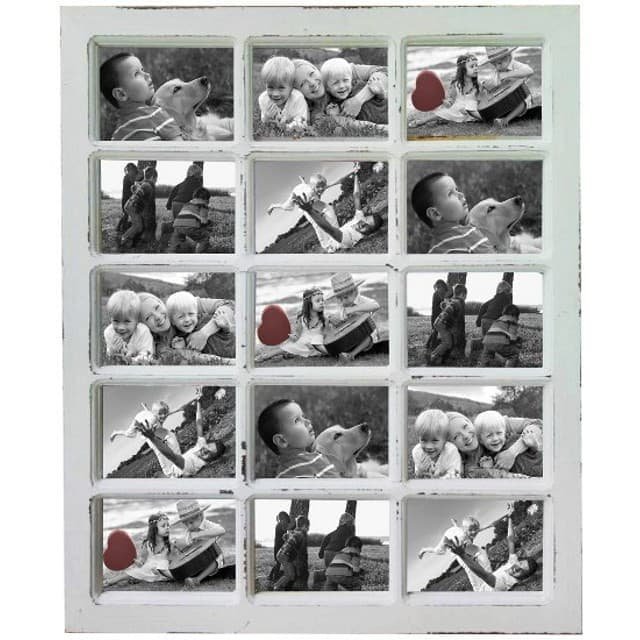
For example, the Antique 15 Collage Photo Frame 78cm is a decorative option designed for multiple memories rather than a single large print. Its product details describe 15 openings for 7 x 5 inch photos and list overall dimensions of L 65 x W 3 x H 78 cm. That distinction tells you two important things: prepare the individual photos to suit the openings, and allow room for the full frame on the wall.
It is sensible to lay your photos out on the floor before printing duplicates or committing to a display. This lets you check that the images feel balanced across the whole arrangement.
3. Ignoring orientation and image cropping
Not every photo will fit every opening in the way you expect. Portrait images are taller than they are wide, while landscape images are wider than they are tall. A collage may have a fixed combination of orientations. Even when all openings use the same nominal photo size, the direction of each opening affects which photographs will work best.
Avoid hurried cropping by sorting your images into portrait and landscape groups first. Then consider the focal point of each image. A close-up portrait can lose important detail if a face sits near an edge, while a landscape can feel cramped if the horizon is cropped too tightly.
A practical photo-preparation checklist
- Confirm the stated opening size before ordering prints.
- Check whether each selected photo is portrait or landscape.
- Leave a little breathing room around faces, pets, buildings and other focal details.
- Use copies of irreplaceable photographs rather than cutting or altering originals.
- Arrange the full set digitally or on a table before loading a collage frame.
4. Matching the frame to the photo but not the room
A frame is part of the room once it is hung. Its colour, texture and visual weight should work with nearby furniture, wall colour, lighting and decorative objects. A very ornate frame can become the focal point in a pared-back room, while a slim, understated frame may disappear on a large feature wall.
Rather than trying to match every timber tone precisely, look for a consistent overall direction. For example, rustic finishes can work well alongside natural fibres, aged timber, soft neutrals and relaxed country-inspired décor. The Antique 15 Collage Photo Frame has a rustic white MDF wood finish, so it may suit a home looking for that weathered decorative character. It is an example to consider, not a rule that every room needs to follow.
Hold paint chips, fabric samples or photos of the room next to your shortlist. This quick comparison often reveals whether a finish complements the space or competes with it.
5. Forgetting to plan the wall position
A frame can be the right size on paper and still feel wrong when hung too high, too low or too close to another item. Plan the placement before purchasing, particularly for larger collage styles.
Use painter’s tape or paper cut to the frame’s external dimensions to test the proposed position. Step back and view it from the doorway and from the main seating area. This method helps you assess scale without making holes in the wall.
Wall-placement details people often miss
- Clearance: Leave enough space above furniture and around light switches, artworks and shelves.
- Visual centre: Consider where the centre of the composition sits, rather than focusing only on the top edge.
- Viewing distance: Detailed photo collages need enough room for people to stand back and take in the whole display.
- Weight: Check the listed product weight and choose mounting hardware and a wall-fixing approach appropriate to the wall surface.
The example collage frame is listed at 4 kg, so mounting should not be an afterthought. If you are unsure about suitable fixing methods for your wall, seek advice from a qualified local professional or hardware specialist.
6. Buying a collage frame without a photo story
A collage frame is more than a way to display lots of pictures. It works best when the images have a connection: a holiday, a family milestone, a sequence of childhood photos, favourite landscapes or a collection of black-and-white portraits. Random images can still work, but the result is usually stronger when there is a deliberate thread.
Choose one of these simple approaches:
- Timeline: Arrange photos from oldest to newest.
- Colour-led: Use images with similar tones for a calm, cohesive result.
- Event-led: Capture a wedding, holiday, birthday or family gathering.
- People-led: Give each opening to a different person, pet or meaningful place.
Mixing colour and black-and-white photography can be effective, but do it intentionally. Repeating a visual element, such as similar editing or a limited palette, helps the collection feel considered.
7. Overlooking material, depth and handling needs
Material affects both the appearance of a frame and how it fits into a room. Read the product description rather than assuming a finish is solid timber, metal or another material from a screen image. For instance, the Antique 15 Collage Photo Frame is described as MDF wood with a rustic white finish. That information can guide how you coordinate it with the rest of your décor.
Depth is worth checking too. A frame that projects from the wall can create a pleasing layered look, but it may be less suitable in a narrow passageway or behind a door. Think about where people move through the space, and keep protruding décor away from areas likely to be bumped.
8. Skipping the product page before checkout
The final of these picture frame buying mistakes is treating the cart as the place to make decisions. The product page is where you should confirm the details that affect suitability. Review the current dimensions, material, number and size of openings, product imagery, availability and delivery information before completing an order.
If you are comparing styles, explore the wider Picture Frames category first. A broad selection makes it easier to compare single-photo frames, collage layouts, finishes and sizes before selecting the option that matches your photos and space.
A simple way to choose with confidence
Good frame buying starts with a plan: measure the image and wall, identify the display orientation, choose a finish that belongs in the room, and check the full product details. For multi-photo displays, prepare your image set before you order. These steps take only a little time, yet they help prevent avoidable sizing, placement and styling issues.
When you are ready to compare options, visit Nola Home & Garden and use the product information to find a frame that suits both the memories you want to show and the home you want to create.
Frequently asked questions
How do I know what size picture frame to buy?
Measure the photo or artwork first, then check the product listing for the opening size and external dimensions. The opening must suit the image, while the external dimensions must suit the intended wall, shelf or furniture surface.
What should I check before buying a collage photo frame?
Check the number of openings, the size of each opening, portrait and landscape orientation, the complete frame dimensions, material and weight. It also helps to choose and test your image collection before ordering prints.
Can I use different types of photos in one collage frame?
Yes. A mix of family portraits, travel scenes and meaningful details can work well when there is a unifying element. Try consistent colour treatment, a shared event or a chronological story to make the arrangement feel cohesive.
Where should I hang a large photo collage?
Choose a wall with enough clear space to appreciate the complete arrangement, such as above a console, along a hallway wall or in a living area. Test the outline with painter’s tape or paper first, and keep the frame clear of busy traffic areas.
Why is the frame’s material important?
Material influences the finish, visual style and how the frame complements other furnishings. Always read the listing rather than guessing from photos. This is particularly useful when comparing timber-look, MDF wood, metal or painted finishes.