
A thoughtful kitchen utensils comparison guide can make it much easier to choose tools that genuinely suit your cooking routine. Rather than filling a drawer with single-purpose items, start by comparing what each utensil does, the material it is made from, how it will work with your cookware and where you will keep it. Nola Shop’s Nola Home & Garden store brings together kitchenware options for everyday preparation, cooking, draining and serving.
The right mix is personal. A household that cooks pasta and stir-fries most nights may prioritise strainers, tongs and turners, while a keen baker may place measuring, mixing and scraping tools at the top of the list. Use this guide to compare the main categories before browsing the Kitchen Utensils collection.
Start with the jobs you do most often
Kitchen utensils are easiest to assess by task, not by appearance. Make a short list of the meals you prepare in a typical week, then identify the repetitive jobs that could be safer, quicker or less messy with a dedicated tool.
Preparation utensils
Preparation covers measuring, peeling, grating, mixing, whisking, cutting and transferring ingredients. These are often the most-used tools in a kitchen, so comfortable handling and easy cleaning matter as much as the core function.
- Measuring tools suit recipes where repeatable quantities matter.
- Peelers and graters can reduce prep time for vegetables, citrus and cheese.
- Whisks, spatulas and mixing spoons support batters, sauces and everyday mixing.
- Colanders and small strainers help rinse produce and separate liquids from food.
Cooking utensils
Cooking tools work directly around heat, cookware and food. Turners, ladles, skimmers, tongs and serving spoons all have distinct roles. When comparing them, consider the depth of your pots, the size of your pans and whether you need a tool for gentle stirring, lifting, turning or draining.
A broad, flexible turner may be useful for delicate foods, whereas tongs provide more controlled gripping. A ladle is designed for liquid dishes, while a slotted spoon or skimmer lets liquid drain away as food is lifted. Choosing based on the movement you need to make is more useful than choosing on looks alone.
Draining and lifting utensils
Draining tools are especially helpful when you need to lift food from water or oil while leaving liquid behind. Options range from large colanders for bulk draining to handheld mesh tools for smaller portions. Compare mesh density, bowl or basket shape, handle length and how the item will be stored.
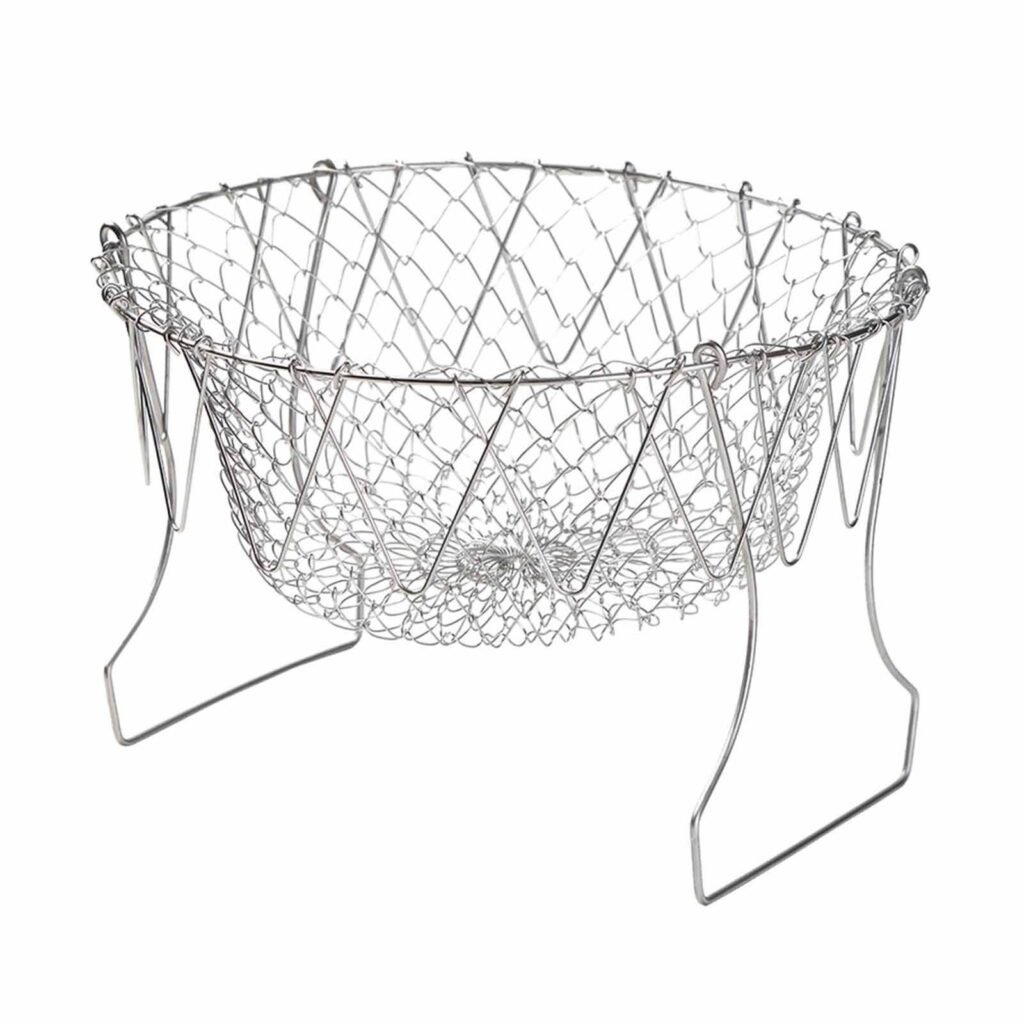
For example, the Stainless Steel Frying Basket Foldable Moderate Mesh Density Versatile Cooking Strainer Net for Kitchen is listed as a 304 stainless-steel, foldable option with moderate-density mesh. Its product information describes uses including oil straining, water draining, vegetable washing and frying. This makes it an example worth considering if you want one tool for several draining-related tasks; check the current product page for the full listing details and whether its form suits your cookware.
Compare kitchen utensil materials carefully
Material affects a utensil’s feel, care requirements and compatibility with cookware. There is no universally perfect material: the practical choice depends on the job and the surfaces it will touch.
MaterialUseful qualities to compareConsider before choosing
Stainless steelRigid construction, a clean contemporary look and suitability for many preparation and draining tasksCheck the edges, handle design and whether it is appropriate for your cookware surface.
SiliconeOften flexible, useful for scraping bowls and working around coated cookwareCompare the shape, firmness and heat-care guidance on the individual listing.
Wood or bambooA traditional feel and gentle contact with many cooking surfacesConsider the cleaning and drying routine required for the item.
Nylon or other syntheticsOften lightweight and available in many utensil shapesReview the product-specific care instructions and intended use.
Do not assume that every utensil made from a given material behaves identically. Thickness, construction, handle joins and intended purpose can change the way an item feels in use. Review the listing for each individual product rather than relying on material alone.
Match the utensil to your cookware
Your existing pots and pans should influence your decision. A tool that is excellent for a stainless-steel stockpot may not be your preferred choice for a coated frying pan. Before buying, identify the cooking surfaces you use most and consider how firmly the utensil needs to contact them.
- For deep pots, compare handle reach and how easily the head or basket can retrieve food.
- For frying pans, look at the shape and width needed to turn or lift food without crowding the pan.
- For coated cookware, follow the cookware maker’s care guidance when selecting utensils.
- For small saucepans, compact heads can offer more control than oversized tools.
- For serving bowls and platters, consider a utensil’s capacity and whether it gives you enough control at the table.
This approach helps avoid a common mistake: choosing an attractive tool that is simply too large, too short or too rigid for the cookware already in your kitchen.
Choose between specialised and multi-purpose tools
Specialised utensils can make particular tasks more straightforward, while multi-purpose designs may reduce clutter. The better option depends on how frequently you do the task and how much storage space you have.
When a specialised utensil makes sense
Choose a dedicated tool when the task is frequent, awkward or benefits from a particular shape. A pasta server, fine strainer or fish turner may earn its space for someone who regularly makes the relevant dishes. A specialised utensil can also provide better control than trying to adapt a general spoon or turner.
When a multi-purpose utensil is practical
A multi-purpose piece can be a sensible option for smaller kitchens, occasional cooks or anyone building a first utensil set. The foldable frying basket above illustrates this approach: according to its listing, it can be used across straining, draining, washing vegetables and frying-related tasks. Its foldable design may also be relevant if cupboard or drawer space is limited.
The trade-off is simple: one versatile tool may cover several jobs, but a dedicated tool can be more tailored to one specific job. Prioritise the option that reflects your normal routine rather than buying for a task you only perform once or twice a year.
Assess storage, cleaning and handling before checkout
Practical kitchen utensils are ones you can find, use and put away without frustration. These points are easy to overlook in a product comparison, but they can make a meaningful difference over time.
Storage
Measure a narrow drawer, utensil crock or cupboard shelf if space is tight. Foldable, nesting or hanging-friendly designs can make organisation easier, but only if the folded dimensions and shape work with your available space. Long handles can be useful at the stove yet awkward in a shallow drawer.
Cleaning
Consider where food can collect: mesh, joins, rivets, textured grips and narrow gaps may need closer attention after use. Select a tool whose cleaning requirements fit your habits, and follow the care information supplied on the product listing.
Handling
A utensil should feel balanced for its intended job. Compare the handle length, grip area, weight and head shape. For lifting or draining, think about how you will hold the utensil while liquid runs off and whether the size is manageable for the portions you usually prepare.
A simple kitchen utensil comparison checklist
Use this checklist as you browse the range at Nola Home & Garden:
- What exact task do I need this utensil to do?
- Will I use it weekly, occasionally or for a particular recipe?
- Which material and shape suit my cookware and food-prep style?
- Is the handle, head or basket sized appropriately for my pots and pans?
- Where will it be stored when not in use?
- Can I clean and care for it in line with the listing’s instructions?
- Would a versatile design meet my needs, or is a dedicated utensil more appropriate?
By answering these questions, you can build a kitchen toolkit gradually and intentionally. Begin with the items that solve your most regular cooking jobs, then add specialist pieces as your recipes and confidence expand.
Frequently asked questions
What are the most useful kitchen utensils to buy first?
Start with tools that support the meals you cook most often. Many kitchens benefit from a turner, stirring spoon, ladle, tongs, measuring tools, a whisk, a peeler and a draining option. Adjust that list to your cookware, recipes and available storage.
How do I choose between a colander, strainer and skimmer?
A colander is generally suited to draining larger amounts of food, such as pasta or washed vegetables. A strainer is often useful for smaller ingredients or finer particles, while a skimmer or slotted lifting tool is designed to retrieve food from liquid. Compare the quantity of food, the liquid involved and the level of control you need.
Are stainless steel kitchen utensils suitable for every pan?
Suitability depends on the utensil’s design and your cookware maker’s guidance. Stainless steel can be useful for many kitchen tasks, but it is wise to check recommended utensils for the particular surfaces you own, especially coated cookware.
What should I look for in a frying basket or cooking strainer?
Compare the basket size, mesh density, handle arrangement, material, storage design and the tasks stated on the listing. If storage is a priority, a foldable format may be worth considering. Make sure the item’s shape and size suit the pot or pan you intend to use.
How can I keep kitchen utensil drawers organised?
Group utensils by task, keep your most-used pieces closest to hand and remove duplicates that do not serve a distinct purpose. Drawer dividers, a bench-top utensil holder or hooks can help, depending on the tool shapes and your kitchen layout. Foldable or compact items can be useful where drawer depth is limited.


