
Coffee table styling ideas can make a living room feel considered without making it look too precious to use. The most successful table arrangements combine a little personality with enough clear surface for a mug, remote control or snack plate. Whether your room is compact, family-focused or made for entertaining, a few simple styling choices can turn this hardworking piece into a welcoming focal point.
For more furniture inspiration, explore Nola Furniture. Its coffee-table selection offers a useful starting point when you are planning a new layout or refreshing an existing lounge area.
Start with how your living room is actually used
Before arranging decorative objects, think about what needs to happen around the table each day. A formal sitting room may suit a more sculptural display, while a busy family room benefits from an open, easy-to-reset surface. Styling is far easier when the table supports the room rather than competes with it.
Ask yourself a few practical questions:
- Do people regularly eat, work or play games in this space?
- Will children or pets be using the room?
- Is the table within comfortable reach of the main seating?
- Do you need extra surfaces when friends visit?
- Would drawers, shelves or an open base help keep everyday items organised?
Your answers should influence the amount of decor you use. Leaving generous clear space is not a styling failure; it is often what makes a living room feel calm and functional.
Use the “three zones” approach to coffee table decor
A reliable way to build a balanced arrangement is to mentally divide the tabletop into three loose zones. This avoids the common problem of placing lots of small items evenly across every inch of the surface. Instead, each zone has a job, and the gaps between them give the eye somewhere to rest.
Zone one: create height with one organic element
Choose a vase with fresh foliage, a branch, dried stems or a low-maintenance plant. The aim is gentle vertical interest, not a centrepiece so tall that it blocks conversation or the television. A lower, wider arrangement often works well where sightlines matter.
If flowers are not practical for your household, try a sculptural bowl, a lantern or a ceramic vessel. Natural texture—such as timber, stone-look finishes, woven fibres or greenery—can soften a room filled with upholstered seating and straight-edged cabinetry.
Zone two: add a stack for colour and character
Two or three larger books can anchor a coffee table arrangement. Choose titles that genuinely interest you: architecture, gardens, travel, art, food or Australian landscapes all add an authentic note. Place a small object on top, such as a candle holder or a keepsake, to create a simple layered moment.
There is no need to buy books solely for their covers. A collection looks more personal when it reflects the people who live in the home. If visual clutter bothers you, use just one substantial book and rotate it occasionally.
Zone three: contain loose essentials
A tray is one of the most useful styling tools in a living room. It gathers remotes, coasters, matches or a small candle into one intentional-looking group, and it can be lifted aside quickly when you need more space. Choose a tray shape that contrasts with the table: a round tray can soften a rectangular table, while a rectangular tray can add order to a round one.
Keep only the items you use often. The tray should make daily life easier, not become another place where clutter collects.
Work with shape, scale and negative space
Good living room coffee table decor relies less on matching everything perfectly and more on creating contrast. Mix a few heights, materials and shapes, then leave breathing room around them. That negative space is especially important on smaller tables and in compact rooms.
Pair shapes deliberately
Round coffee tables naturally encourage softer groupings. Try a curved vase, a round bowl and a square book stack for a varied but connected look. On a rectangular table, consider a long tray at one end and a lower object or books at the other rather than arranging everything in a rigid line.
If your lounge has angular furniture, circular accessories can make the scheme feel less severe. Conversely, clean-lined trays and books can bring structure to a room with lots of rounded forms.
Keep the proportions comfortable
Decor should support the table, not hide it. One oversized object can overwhelm a compact top, while many tiny pieces can look fussy on a large surface. As a general visual rule, select fewer, more substantial pieces and adjust from there.
Also consider the table in relation to the sofa and walkways. A coffee table needs enough room around it for people to move comfortably, while still being convenient from the seats. When a fixed large table feels too dominant, a flexible arrangement may be the better styling answer.
Make a small living room feel more flexible with nesting tables
Nesting coffee tables can be particularly helpful in smaller living rooms because they allow you to change the footprint of the furniture as needed. Keep the smaller table tucked beneath the larger one on quieter days, then pull it out beside an armchair or sofa when you need an extra surface.
This format also makes styling easier. Rather than covering one large top with decor, place a simple focal point on the main table and leave the companion table mostly clear for practical use. The result can feel lighter and more adaptable than a single bulky piece.
Within the Coffee Tables collection, you can compare a range of approaches to shape, scale and living-room function. With 92 options in the collection, it is worth narrowing your shortlist by room dimensions, storage needs and the way you entertain before focusing on the finish.
Build a layered look with a nesting coffee table set
A nesting set gives you an opportunity to create a layered arrangement that still feels tidy. Position the tables partially overlapping for a compact, composed look, or separate them to serve different seats. Keep visual continuity by repeating one or two materials or colours across both surfaces.
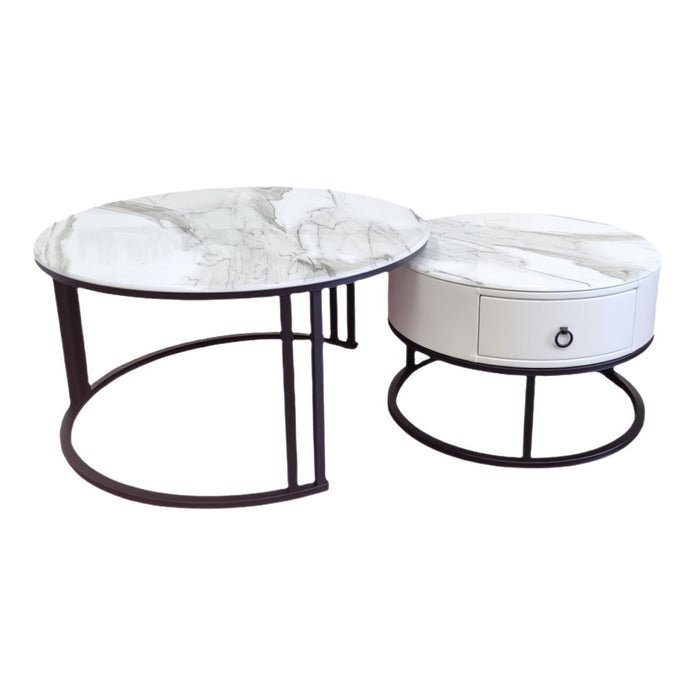
For example, the Snowy Mountain Faux Modern Marble Slate Nesting Coffee Table Set Leather Wrapped Wood Drawers is one option to consider when exploring this style. Its product description notes two round tables, a stone-look surface, metal frames and a nesting design. These elements suggest a useful direction for interiors that need adjustable table positions while retaining a polished, contemporary look.
To style a set like this, use the larger table as the visual anchor. Add a tray with coasters and one low decorative piece, then reserve the smaller table for a book, a drink or a plant. Avoid duplicating the same display on both tables; asymmetry gives the arrangement a more relaxed finish.
A simple styling formula for two tables
- Larger table: a tray, candle or bowl, plus a small stack of books.
- Smaller table: one useful item, such as a coaster set, current read or compact vase.
- Between the tables: leave enough exposed surface to appreciate the shapes and finishes.
- Nearby: echo one colour from the tables in a cushion, throw or artwork for a connected scheme.
Choose a mood, not a rigid theme
Instead of trying to make every item match, aim for an overall mood. This keeps your home from looking like a showroom and makes seasonal updates much simpler.
Warm and relaxed
Use timber tones, linen-look textiles, handmade ceramics, warm neutrals and green foliage. A woven tray or earthy bowl can introduce texture while keeping the palette understated.
Contemporary and calm
Build around black, white, grey, stone tones and simple forms. Limit the palette, choose one metallic accent if desired, and use books or art objects with clean profiles. A stone-look tabletop can become a strong visual base for this direction.
Colourful and collected
Start with a neutral table, then add personality through book spines, patterned coasters, a coloured glass vessel or an object picked up while travelling. Repeat one accent colour two or three times around the wider room so the table display feels intentional.
Refresh rather than constantly replace
A coffee table is an ideal place to make small seasonal changes without redecorating the whole room. In warmer months, try fresh greenery and lighter-toned ceramics. During cooler periods, switch to a textured bowl, deeper colours or a candle displayed safely according to its instructions. The goal is a modest edit, not an entirely new collection of objects.
Every few weeks, clear the tabletop and put back only what you value or use. This quick reset helps prevent visual clutter and lets the furniture itself remain part of the design. It also gives you a chance to reassess whether the current arrangement is serving the household.
Final thought: style for real life
The best coffee table styling ideas leave room for living. Start with one practical layer, such as a tray or a few books, add a little height and texture, and stop before the surface feels crowded. A flexible choice such as nesting tables can make the room even easier to adapt for visitors, quiet nights and everything in between. Browse Nola Furniture when you are ready to explore coffee-table options that suit your own space and routine.
Frequently asked questions
How many items should I put on a coffee table?
There is no fixed number, but three grouped elements are often enough: for example, a tray, a book stack and a vase. On a smaller table, one or two well-chosen pieces may look better. Keep a usable clear area for everyday activities.
What should I put on a coffee table in a family room?
Prioritise easy-to-move, durable and useful items. A tray for remotes and coasters, a low bowl and a couple of books are a practical starting point. Avoid sharp, unstable or highly breakable decor where it is unsuitable for your household.
Are nesting coffee tables suitable for small spaces?
They can be a practical choice because the smaller table can tuck away when not needed and move out when extra surface space is useful. Measure your seating area and walkways first so the tables can be used without restricting movement.
How do I style a round coffee table?
Create a loose triangle with objects of different heights, such as a low stack of books, a bowl and a small vase. A round tray can create a central focal point, but leave part of the tabletop visible to avoid a crowded appearance.
Should my coffee table match my TV unit?
It does not need to match exactly. A more natural result often comes from repeating one element—such as a timber tone, dark frame, curved shape or metal finish—while allowing the pieces to have their own character.


