
A thoughtful wellness accessories comparison can make everyday self-care feel less complicated. Rather than collecting items that look useful but sit unused, start with the moment you want to improve: winding down at night, getting comfortable while travelling, taking a screen break or making a small routine easier to maintain. The aim is not to create a perfect wellness setup; it is to choose practical accessories that fit your habits, space and preferences.
The Health & Beauty store at Nola Shop brings together options for those small, personal routines. Within its Wellness Accessories collection, it helps to compare items by use case first, then consider comfort, care requirements and portability. This approach is more useful than assuming one type of accessory suits every person or situation.
Compare wellness accessories by the routine they support
“Wellness accessory” covers a wide variety of products. Some are designed for rest, others for personal care, movement, relaxation or convenience away from home. Comparing them by their role makes the category easier to navigate.
Sleep and wind-down accessories
These products are intended to support a more settled bedtime environment. Depending on the item, they may help reduce unwanted light, add a comforting layer to a routine or make a shared or unfamiliar sleeping space feel more manageable.
When comparing sleep-focused accessories, look beyond broad claims and consider the practical details:
- Contact points: Will the item sit against the face, head, neck or ears?
- Adjustability: Can it be adapted for different head sizes or sleeping positions?
- Light and sound environment: Which interruption are you actually trying to manage?
- Care: Is the material and construction realistic for your cleaning routine?
- Storage: Will it have a dedicated spot, or need to pack down for travel?
An accessory can complement a regular bedtime routine, but it is not a substitute for professional advice when sleep difficulties are persistent or affecting daily life.
Travel and on-the-go comfort accessories
Travel accessories earn their place when they are easy to carry and solve a recurring inconvenience. Think about the actual journey: a daytime flight, a hotel room, public transport, a long car trip as a passenger or a short break between appointments. A bulky item may be fine in a suitcase but impractical in a day bag; a lighter option may be easier to use often.
For this group, compare packability, adjustability, durability and how easily the accessory can be kept clean. It is also worth considering whether you would use it at home. Dual-purpose items can be particularly practical when storage is limited.
Relaxation and personal-care accessories
This part of the category is often about creating a deliberate pause in the day. The best option is usually the one that works with a routine you already have, such as a few quiet minutes after work or a slower evening ritual. Avoid buying an item solely because it promises a transformative experience. A simple accessory that you genuinely enjoy using is more likely to become part of your week.
Movement and recovery-related accessories
Accessories used before or after activity should be compared with care. Consider your preferred type of movement, the amount of pressure or support that feels comfortable and whether you can use the item safely. Product information can explain intended features, but it should not replace guidance from a qualified health professional for pain, injuries or ongoing symptoms.
A side-by-side framework for a better wellness accessories comparison
Once you have narrowed the use case, compare shortlisted products using the same criteria. This keeps the decision grounded in everyday use rather than packaging language or a single feature.
Comparison pointWhy it mattersQuestion to ask
Primary purposePrevents duplicate or mismatched purchases.What specific part of my routine will this support?
Fit and adjustabilityComfort often depends on individual shape and preference.Can I adjust it, and where will it touch my body?
Materials and finishAffects feel, cleaning and suitability for repeat use.What do the product details say about materials and care?
Size and portabilityDetermines whether it suits home, work or travel.Where will I store and use it most?
Routine effortUseful accessories should be easy to reach for.Will setup, cleaning or charging become a barrier?
Listing detailsConfirms the current version and inclusions.Have I checked the full product page before ordering?
Comfort is personal, so there is no universally correct material, shape or level of firmness. Where an accessory is worn or used against the skin, read the listing closely, follow its care instructions and discontinue use if it causes discomfort or irritation.
Example comparison: a contoured sleep mask for home and travel
A sleep mask is a useful example because its value depends on more than light coverage. For someone who prefers not to have fabric resting directly on their eyelids, construction and fit can matter just as much as the outer material.
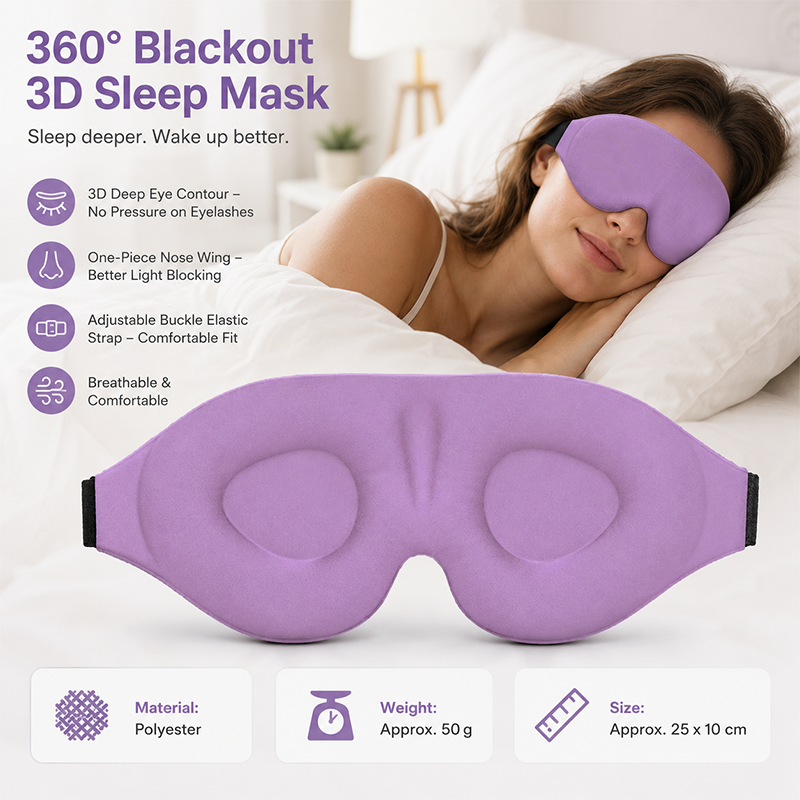
The Purple 3D Contoured Sleep Eye Mask is one option in the collection to consider when comparing sleep and travel accessories. Its product description highlights recessed 3D eye chambers, an adjustable strap and an integrated nose-wing design. These are features to assess against your own preferences, particularly if you want space around the eyes or need a mask that can be adjusted for a secure feel.
What to compare with other sleep masks
- Eye area: A contoured design may appeal to people who prefer less direct contact around eyelashes and eyelids.
- Nose area: Different mask shapes seal differently around the bridge of the nose, so fit is important for managing light gaps.
- Strap design: An adjustable strap offers flexibility, but placement and tension still need to feel comfortable when lying down.
- Sleeping position: Side sleepers may wish to consider how the mask’s depth and edges feel against a pillow.
- Use beyond bedtime: For naps or travel, think about how easily it stores and whether you would be comfortable wearing it in a seated position.
The listing describes the mask as a 360-degree blackout blindfold. Treat this as a product feature to review alongside the full current details, rather than a guarantee that every wearer will experience the same fit or level of light blocking. Facial contours, strap tension and sleeping position all influence real-world use.
Build a small, usable wellness kit
A well-considered kit does not need many pieces. Begin with one accessory for the routine that currently feels hardest to maintain. For example, a traveller might prioritise a compact comfort item, while someone refining their evening routine may start with a sleep-focused accessory.
- Name one recurring friction point. It might be bright surroundings, discomfort while sitting, an inconsistent wind-down routine or lack of convenient storage.
- Choose the setting. Decide whether the item is mainly for home, work, a gym bag or travel.
- Set a realistic care limit. Select something you can clean, store and use consistently.
- Check the full listing. Confirm the current product description, images and any relevant details before placing an order.
- Use it for its intended purpose. Give a simple routine time before adding more accessories.
This measured approach helps keep self-care practical. Explore the broader Wellness Accessories range when you are ready to compare different routine needs, rather than trying to solve every aspect of wellbeing with one purchase.
Common comparison mistakes to avoid
Choosing by appearance alone
Colour and styling can be enjoyable, but they do not tell you whether an item will fit, pack easily or be simple to maintain. Start with function, then use appearance as a tie-breaker.
Overlooking the environment of use
An accessory that works beautifully beside your bed may not suit a carry-on bag or a shared living space. Be clear about where it will be used most often.
Expecting an accessory to solve a health concern
Wellness products can support personal comfort and routines, but they are not medical devices unless explicitly identified as such. Seek appropriate professional advice for health concerns, injuries or persistent sleep issues.
Skipping care and hygiene details
Accessories used frequently, particularly close to the face or body, need a care plan. Check the current listing and retain any manufacturer guidance so the item remains pleasant to use.
Frequently asked questions
What counts as a wellness accessory?
Wellness accessories are practical items used to support everyday comfort, personal-care rituals, relaxation, sleep routines, travel or movement. The category is broad, so the most useful way to compare products is by the routine or setting they are designed to support.
How can I compare wellness accessories fairly?
Compare products according to purpose, fit, materials, cleaning needs, portability and the current product information. Use the same questions for each option, rather than focusing on a single feature or visual style.
Are contoured sleep masks suitable for side sleepers?
They can be worth considering because their shape may create space around the eyes, but comfort varies between individuals. Review the mask depth, strap placement and edge profile, then consider how these may feel against your pillow in a side-sleeping position.
What should I check before using a sleep accessory while travelling?
Check that it is easy to pack, comfortable to wear while seated and simple to keep clean between uses. For items worn on the face or head, adjust the fit before your journey rather than relying on a first use in transit.
Can wellness accessories improve sleep or treat health issues?
Accessories may help make a personal routine or environment feel more comfortable, but individual results vary and they should not be relied on to diagnose, treat or cure health concerns. Consult a qualified health professional for ongoing sleep problems or other symptoms.


