
Outdoor play equipment for kids can make everyday time at home more active, social and imaginative. From simple throwing games to larger backyard setups, the right choice depends less on buying the biggest item and more on finding an activity that suits your child’s age, your available space and how your family likes to play together.
This guide explains what to look for before choosing outdoor play toys. It also covers ways to create a flexible play area that works in a backyard, courtyard, park visit or even indoors when the weather changes.
Start with the type of play your child enjoys
Children are more likely to return to equipment that matches their natural interests. Before comparing products, think about the movements and games they already enjoy.
- Aiming and accuracy: putting, tossing, target games and ring games can encourage focus and repeated practice.
- Big-body movement: climbing, kicking, running and balancing activities may suit children who like to move continuously.
- Open-ended play: sand, water, imaginative play pieces and loose play items can be used differently each time.
- Group games: activities with turns, scoring or shared targets are useful for siblings, visiting friends and family play.
There is no single “right” game type. A quiet child may love an individual target activity, while a highly social child may prefer a game that invites everyone to join in. Choosing something with more than one way to play can also help keep an activity interesting as confidence grows.
Measure the play space before you shop
Space affects both enjoyment and safety. Take a quick look at where the equipment will be used most often: lawn, paved patio, deck, driveway, local park or an indoor living area. Consider the equipment footprint as well as the clear space needed for swinging, throwing, running or retrieving items.
Backyard and lawn areas
A lawn can be well suited to active games, but check for uneven ground, garden edges, low branches and obstacles. Leave a buffer around the activity so children are not playing too close to hard surfaces, fences or outdoor furniture.
Courtyards, balconies and compact homes
Smaller areas often call for compact equipment, soft components and games with a clear target rather than long-distance play. Consider whether balls or pieces could travel beyond the intended area, particularly near stairs, railings or neighbouring spaces.
Indoor use
Some outdoor game sets can also be useful inside when used on an appropriate surface and with adequate room. Look for activities that can be adapted to lower-energy play indoors, and always follow the product’s instructions for suitable use and supervision.
Choose age-appropriate outdoor play equipment
Age guidance is an important starting point, but it should not be the only consideration. Children of the same age can have different coordination, confidence and attention spans. Read the supplied product information and consider whether the game’s size, pieces and level of adult involvement make sense for your child.
For younger children, simpler rules and larger, easier-to-handle pieces can make it easier to participate. Older children may enjoy greater challenge, such as keeping score, setting targets farther away or inventing game variations. If several ages will play together, choose an activity that can be adjusted so everyone has a fair chance to take part.
It is also sensible to supervise children closely, especially where small components, throwing games, putters or other sporting-style equipment are involved. Keep play areas clear and encourage children to wait until others are out of the way before taking a turn.
Look beyond the product photo: what to compare
Attractive colours and a fun theme can catch attention, but the practical details determine whether an item fits your household. Use this checklist when comparing options in the Outdoor Play Equipment collection.
Materials and components
Check what is included, what parts need assembly and which pieces will be handled most often. For target-based games, consider the type of balls, rings, beanbags or other play pieces supplied. If you expect to pack the set away frequently, individual components should be easy to gather and store.
Setup and pack-down
Ask how much preparation your family is realistically likely to do. A quick-to-bring-out game can be ideal for a short afternoon session, while a larger setup may suit households with a dedicated play area. If portability matters, think about whether it can travel comfortably to a relative’s home or local park.
Ways to vary the challenge
Equipment with adjustable distances, targets or scoring ideas can support repeat play. You do not need complicated rules: moving a target, changing a throwing line or taking turns with a different challenge can refresh a familiar game.
Storage after play
Plan storage before buying. A dry, accessible spot makes it much easier to use outdoor toys regularly. Smaller pieces should be kept together in a suitable container, particularly if children will help with pack-down.
A versatile example: a multi-activity target game
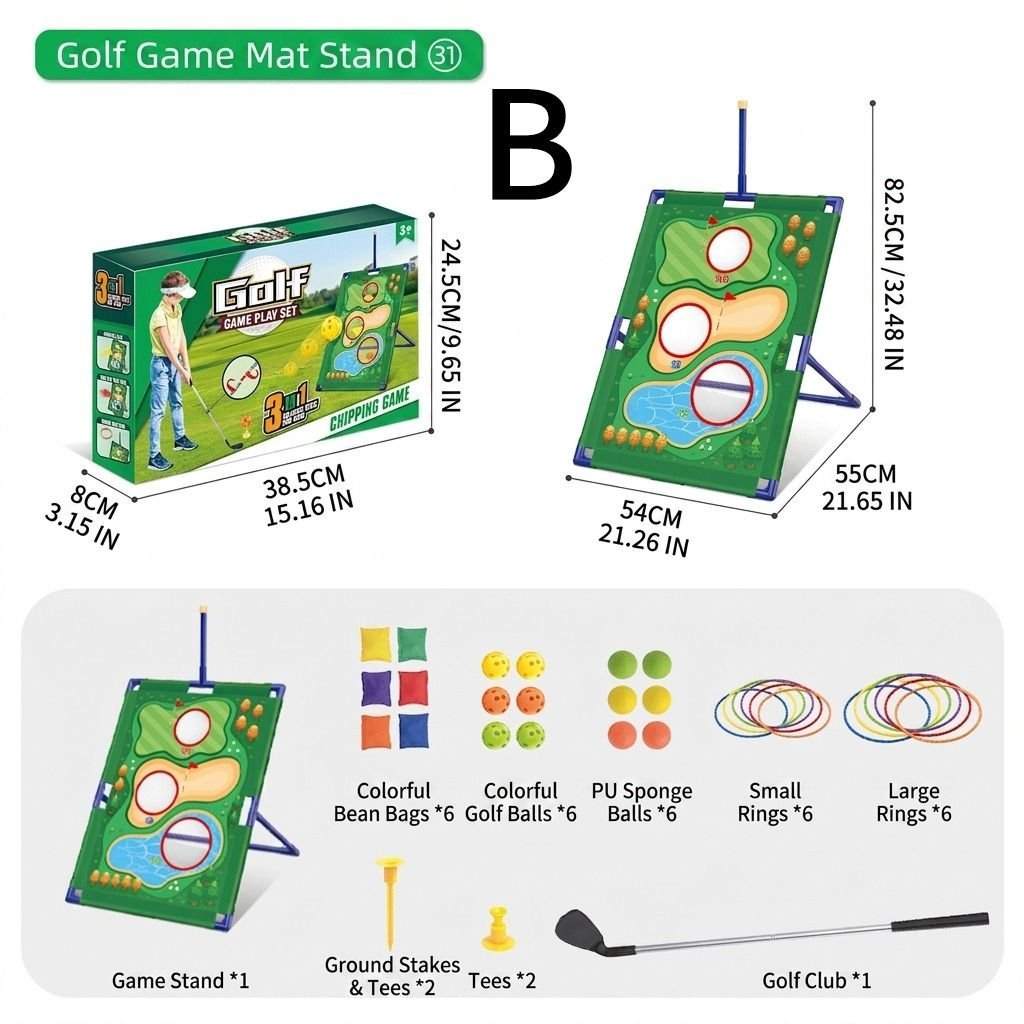
A multi-purpose set can be a thoughtful option for families who want several activities without filling the yard with separate games. For example, the 3-in-1 Kids Golf Putting & Tossing Game Set combines putting, beanbag tossing and ring-aiming play.
According to the product description, the set includes a 72 cm stainless steel putter, a cloth mat with scoring patterns, a target frame, soft balls, beanbags and rings, and is designed for children aged 3 and up. Those different components can help a family switch between activities rather than relying on one game format. As with any activity involving a putter or tossed items, set clear boundaries and supervise play appropriately.
It is an example rather than a universal solution: families with very limited space may prioritise a smaller activity, while children who prefer climbing or imaginative play may be drawn to a different category of equipment. Explore more children’s play options through Nola Baby & Kids to compare activities that suit your home and routine.
Make outdoor games more engaging without overcomplicating them
Once you have chosen equipment, a few simple ideas can extend its use. Keep the emphasis on fun, participation and safe movement rather than making every session competitive.
- Create a start line suited to each player’s ability.
- Use turns and encourage players to help retrieve and pack away pieces.
- Set a simple challenge, such as landing three beanbags near a target.
- Let children suggest new rules or make their own scorecards.
- Pair a target game with a movement break, such as walking to collect each item.
- Invite adults to play too; shared games can make an ordinary afternoon feel more special.
For mixed-age groups, give younger children a closer line or more attempts, rather than expecting everyone to play at exactly the same level. This keeps the game welcoming and helps prevent frustration.
Care and safety habits for outdoor play
Regular checks help keep play equipment ready for the next session. Before use, inspect frames, mats, fasteners and play pieces for visible wear or damage. Place equipment on a stable surface, keep the surrounding zone tidy and put items away after use where practical.
Teach children a few consistent rules: wait for a clear playing area, aim only at the intended target, carry sporting equipment carefully and stop playing if conditions become unsuitable. Adult supervision remains important, particularly for younger children. Product instructions and age recommendations should always take priority over general advice.
FAQs about outdoor play equipment for kids
What outdoor play equipment is suitable for a small backyard?
Look for compact, portable games that use a defined target and do not require a long run-up or large throwing distance. Measure your usable area first, including room around the game, and select activities that can be packed away when not in use.
Can outdoor play equipment be used indoors?
Some items may be suitable for indoor use if the product information allows it and you have enough clear space. Choose a stable surface, remove breakable objects from the area and use only the included play pieces as intended. Indoor supervision is still important.
How do I choose an outdoor game for children of different ages?
Prioritise games with simple rules and adjustable challenges. You can change the distance to a target, the number of attempts or the scoring method so younger and older children can play together without needing identical skills.
What should I check before setting up a kids’ target game?
Check that the area is clear, level and large enough for the activity. Keep people out of the throwing or putting path, position the target away from hazards and make sure children understand when it is their turn to play.
How can I encourage my child to use outdoor toys more often?
Make access easy by storing equipment where it can be reached with your help, suggest a short activity rather than a long session, and join in when possible. Rotating a few games and allowing children to create their own challenges can also maintain interest.