
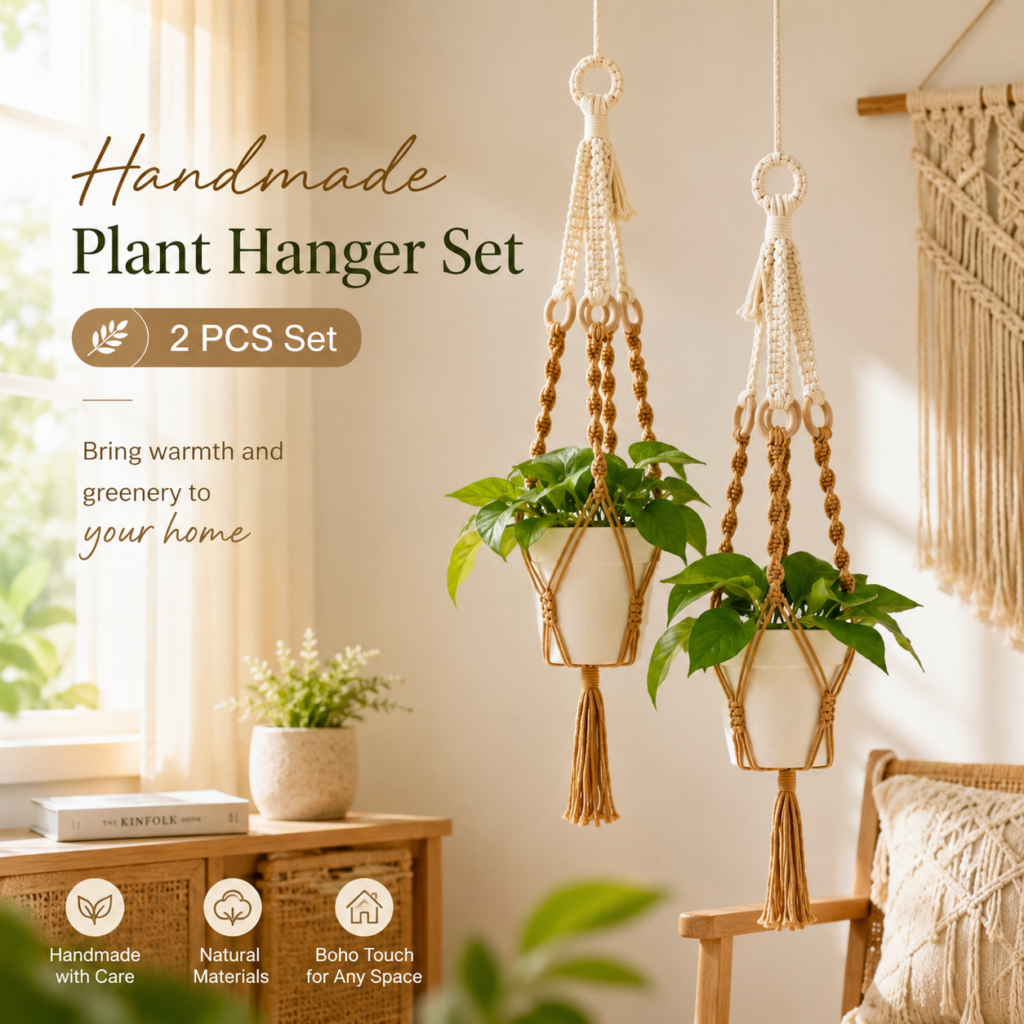
How to hang plants indoors starts with more than choosing a lovely pot: you need the right light, a secure mounting point and a watering routine that suits the space. Done thoughtfully, hanging plants can bring greenery to unused vertical areas, soften a room and keep surfaces clearer. Whether you have a compact flat, a sunny kitchen or a sheltered balcony, this guide will help you plan a display that looks considered and remains practical to care for.
For plant display options and related supplies, explore Nola Home & Garden. Its Gardening Accessories collection is a useful starting point when you are comparing planter styles and garden essentials.
Start with the space, not the planter
It is tempting to choose a hanger first, but the location determines whether a hanging plant arrangement will be easy to live with. Look at the room over several days and note where natural light falls, how people move through the area and where water could drip.
Check the available light
Plants still need suitable light when they are lifted off the floor. A bright spot near a window may work well for plants that prefer brighter conditions, while a position farther into the room may require a plant that tolerates lower light. Avoid assuming that a room is bright simply because it has large windows; the light level can drop quickly away from the glass.
Also consider direct sun. Strong afternoon sun through a window can be harsher than expected, particularly for foliage close to the glass. If a chosen spot receives intense sun, use a plant suited to it or move the hanger slightly back from the window.
Plan around daily movement
A hanging planter should not become an obstacle. Keep it clear of door swings, cupboard doors, walkways and seating areas where someone may brush against it. Allow room for the foliage to grow, and make sure you can comfortably reach the plant for watering, pruning and occasional cleaning.
Useful places often include a window corner, an open section of wall near natural light, a kitchen window that is away from cooking steam, or a calm corner beside a bookshelf. In rental homes, freestanding plant stands, over-door options or removable solutions may be more appropriate than drilling, subject to the property rules and the product instructions.
Think about moisture before installation
Watering is one of the less glamorous parts of indoor hanging plants. Choose a position where you can remove the pot for watering, place a tray underneath while it drains, or protect nearby furnishings. Avoid regularly watering directly above electronics, textiles, timber surfaces or anything that could be affected by drips.
Choose a hanging planter arrangement that suits your plant
The holder, pot and plant need to work as a system. Before buying, consider the pot’s shape, its drainage needs, the mature size of the plant and the total weight once potting mix has been watered. Wet potting mix can weigh considerably more than dry mix, so this matters when choosing both the hanger and the fixing method.
Match the pot to the hanger
Some hanging holders are designed to cradle a separate pot, while others may work with a pot already used for planting. Measure the pot’s widest point and height, then check the product information carefully. The pot should sit steadily rather than tip, slip or place uneven strain on the cords.
Drainage remains important for many houseplants. If the plant is in a nursery pot with drainage holes, placing that pot inside a decorative cachepot can make watering easier: take the inner pot to a sink, let it drain, then return it once excess water has stopped dripping. Do not allow roots to sit in standing water unless the specific plant is suited to that approach.
Consider a macrame option for softer styling
Macrame hangers offer a flexible, decorative way to display pots and can suit interiors with natural timber, textured ceramics, neutral tones or relaxed boho styling. As one example, the Handmade Plant Hanger Set 2 PCS (Type A) is described as a two-piece cotton-rope, macrame woven plant holder set for creating vertical displays in indoor spaces, balconies, patios, porches and covered outdoor areas.
Treat this as an example rather than a one-size-fits-all answer. Compare the dimensions, intended use and product details with your pot, plant and planned mounting position before deciding whether it is suitable.
How to install a hanging planter securely
Safe installation is the most important part of how to hang plants indoors. The correct hardware depends on what you are attaching to: a ceiling joist, timber beam, masonry surface or another structural element. Decorative plasterboard alone may not be suitable for supporting a watered plant and planter.
Use a suitable fixing point
- Locate the structure: identify a suitable joist, beam or other solid fixing point before drilling.
- Choose compatible hardware: use a hook, screw and anchor system that is designed for the surface and anticipated load.
- Follow installation guidance: read the hardware manufacturer’s instructions, including pilot-hole and installation requirements.
- Account for the fully watered setup: assess the combined weight of the pot, wet potting mix, plant and hanger rather than estimating based on an empty pot.
- Seek help where needed: if you are uncertain about the building material, load support or installation process, ask a qualified tradesperson.
Do not rely on curtain rails, light fittings, exposed pipes, adhesive hooks not intended for the load, or a fixture whose condition you cannot verify. If a hanger shows fraying, stretching, damage or unstable knots, stop using it until the issue is resolved.
Set the hanging height
A good starting height is one that keeps the lowest leaves above head level in a walkway while still allowing you to inspect the soil. In a window, place the plant where it can receive appropriate light without constantly touching the glass or blinds. If you are grouping two or more hangers, vary their heights slightly but leave enough room between them for airflow and watering.
Create a balanced indoor hanging plant display
A single hanging plant can make a quiet corner feel more finished. A small cluster can create a stronger focal point, but restraint helps prevent the room from feeling crowded. Start with one or two plants, live with the arrangement for a few weeks, then add more only if the light and maintenance routine are working.
Use shape and texture deliberately
Trailing plants can create movement as foliage grows downwards, while plants with upright leaves add a more sculptural outline. Mixing these forms can be effective, but choose plants with similar light and watering needs if they will be grouped together. This makes care simpler and reduces the chance that one plant is routinely overwatered or left too dry.
Repeat materials for a cohesive look
Coordinate, rather than perfectly match, your pots and hangers. For example, a cotton-rope macrame hanger can be paired with a simple ceramic or lightweight pot and echoed with natural fibres elsewhere in the room. In a balcony or covered outdoor setting, check that both the plant and the holder are appropriate for the conditions, including wind, rain exposure and changing temperatures.
Make watering and maintenance manageable
Plants positioned high up are easy to forget, so build care into your regular routine. Check the potting mix with a finger before watering rather than watering to a fixed calendar. Plant species, indoor temperature, light, pot size and season all affect how quickly soil dries.
A simple care checklist
- Inspect the plant weekly for dry soil, yellowing leaves, pests or signs it needs more or less light.
- Remove or protect nearby items before watering.
- Water slowly and allow excess water to drain where appropriate.
- Wipe dust from leaves so you can better observe their condition.
- Turn the pot occasionally if the plant is leaning strongly towards a light source.
- Check the hook, cords and pot position periodically for wear or movement.
For taller positions, use a stable step stool only if you can do so safely. Otherwise, take the plant down for care. A display that is easy to maintain is far more likely to stay healthy and attractive than one that is difficult to reach.
Common hanging planter mistakes to avoid
Choosing style before suitability
Beautiful styling cannot compensate for poor light or an insecure mount. Confirm the location, plant needs and fixing method first, then select the look you prefer.
Overfilling a small space
Multiple hanging plants may look appealing in photos, but they can block light, clutter a window or complicate watering in a small room. Leave space around each plant and keep the arrangement proportionate to the area.
Ignoring changing conditions
Light patterns shift through the year, and indoor heating or cooling can affect how quickly a plant dries out. Reassess placement and care as seasons change rather than assuming the original routine will always suit.
FAQs about how to hang plants indoors
Where is the best place to hang plants indoors?
The best location depends on the plant’s light needs, but a spot near suitable natural light and away from busy walkways is usually a sensible choice. Make sure you can reach the plant safely for watering and that any occasional drips will not damage surrounding items.
Can I hang a planter from plasterboard?
It depends on the wall or ceiling construction, the hardware used and the total watered weight of the planter setup. Do not assume plasterboard alone is sufficient. Identify a suitable structural fixing point or consult a qualified professional if you are unsure.
How high should an indoor hanging plant be?
Hang it high enough to clear heads and doors, but low enough for safe care. The ideal height also depends on foliage length and whether the pot needs to be removed for watering. Test the position before final installation if possible.
Do hanging plants need drainage holes?
Many plants benefit from a pot with drainage holes, but water management is especially important when the pot is suspended. You can often use a draining nursery pot inside a decorative outer pot, removing it to water and letting excess water drain before returning it.
What should I check before buying a macrame plant hanger?
Check the product details, intended use, pot compatibility and how you will mount it. Measure your pot, consider the combined weight after watering and inspect whether the planned location is protected enough for the materials and your chosen plant.
With the right light, secure installation and a realistic care routine, hanging planters can turn underused space into a welcoming green feature. Browse Gardening Accessories at Nola Home & Garden to compare options as you plan your own vertical garden.


