
An indoor play space for kids does not need a dedicated playroom, a major renovation or a house full of toys. With a little planning, a corner of the lounge, a cleared section of a bedroom or a family-room nook can become a practical place for active movement, imaginative games and calmer reset time. The aim is to make play easy to begin, easy to pack away and appropriate for the child using it.
This guide takes a realistic, room-by-room approach. It will help you choose a location, create useful play zones, manage toys and assess flexible equipment without making assumptions about what every family needs. For more children’s play options, browse Nola Baby & Kids.
Start with the room you already have
Before choosing equipment, look at how your household actually uses the space. A successful kids’ play area at home works with daily life rather than constantly blocking it. Measure the usable floor area, note where people walk through and consider whether the area will stay set up or be packed away after play.
Choose the purpose of the space
One small space can support several kinds of play, but it helps to nominate a main purpose. This keeps the setup focused and prevents every toy from ending up in one pile.
- Active play: crawling, moving through a tunnel, throwing soft balls and pretend adventures.
- Imaginative play: a tent, cushions, soft toys, books and open-ended props.
- Quiet play: reading, puzzles, drawing or building on a mat or low table.
- Shared play: an area where siblings or visiting friends can take turns and cooperate.
For a compact flat or shared living room, a fold-away active-play setup may be more useful than permanent furniture. In a larger rumpus room, you may prefer distinct zones that can remain in place.
Map pathways before placing anything
Use masking tape, cushions or sheets of paper to mark the approximate footprint of a proposed setup. Walk around it as you normally would: from the sofa to the kitchen, through doorways and towards storage. This quick test often reveals whether the space feels workable.
Leave clear access to exits, stairs and doors. Keep play equipment away from heaters, fireplaces, cooking areas, cords, windows and unstable furniture. If a child is likely to climb, pull or lean on nearby items, reassess the location rather than hoping they will avoid them.
Create simple zones instead of one crowded play pile
Dividing an indoor play space into small zones makes it easier for children to understand how to use it. It also makes tidy-up less overwhelming because each item has a logical home. The zones do not need walls or expensive organisers; a mat, basket or change in furniture position can be enough.
1. Movement zone
The movement zone is for big-body play: crawling, rolling, stepping, tossing and moving between spaces. Put it on a stable, level surface with enough clearance for the activity planned. Keep the number of loose items low so there are fewer trip hazards.
A play tent or tunnel can give this area a clear beginning and end, which is especially handy when children enjoy obstacle-course games. If using balls, choose a routine for containing them after play rather than letting them travel throughout the house.
2. Imagination zone
A small enclosed-looking nook can prompt all kinds of pretend play. Add a few versatile items rather than a long list of themed toys: soft toys, a blanket, a torch used with adult guidance, cardboard boxes or a small basket of dress-ups. Rotate the props so the same space can become a campsite, shop, vet clinic or reading cubby on different days.
3. Calm-down zone
Active play and quiet time can sit close together, but they should not compete for the same floor space. Set aside a cushion, beanbag or low chair with a small selection of books. This gives children somewhere to transition after energetic play and helps keep books and delicate activities out of the busiest area.
Choose flexible equipment for changing routines
Children’s interests, confidence and available space can change quickly. Flexible pieces are worth considering when you need a setup that can be rearranged, separated or stored between sessions. Check the product information, intended age guidance, care instructions and dimensions before deciding whether an item suits your household.
The Ball Pits & Play Pens collection at Nola Baby & Kids includes options to compare for different spaces and play styles. Rather than choosing based on appearance alone, think about the activities your child repeats and the amount of floor area you can comfortably dedicate.
An example for a modular active-play area
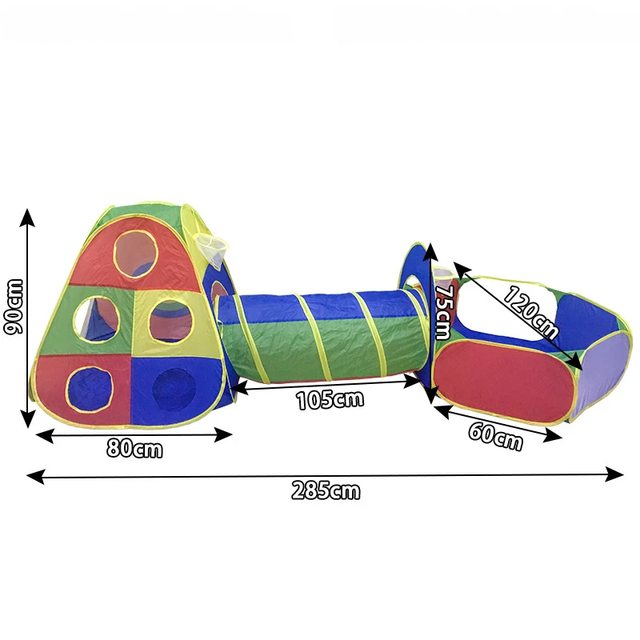
For families looking at a temporary indoor play course, the 3-in-1 Kids’ Pop-Up Foldable Play Tent & Adventure Tunnel Set – Giant Indoor/Outdoor Playpark with Ball Pit & Basketball Hoop is one example to consider. Its product description presents a combination of playhouses, crawling tunnels, a ball pit and a basketball hoop, with components that can be used together or separately.
That modular approach may suit a family that wants to use a tunnel on one day and create a larger connected course on another. It is not automatically the right fit for every room or age group, so review the current listing details and follow all supplied setup and use instructions. Consider where each section would sit, how loose balls will be managed and whether the full configuration leaves adequate clear space.
Build a play routine children can follow
The best setup is one that gets used without creating a constant mess. A short, predictable routine can help children participate in both preparation and pack-down.
- Set out one main activity. For example, build a simple tunnel route or open the tent for pretend camping.
- Add only a few supporting items. A basket of balls, two soft toys or several books is often enough.
- Agree on a play boundary. Explain where balls, props and bodies are meant to stay.
- Finish with a reset. Put loose pieces into labelled tubs, fold away portable items where appropriate and restore walkways.
For younger children, use pictures on storage tubs. Older children can help decide the categories, such as “tunnel toys”, “books” and “pretend-play props”. Clear homes for items are generally more effective than repeatedly asking a child to tidy an undefined pile.
Refresh play without continually buying more
Novelty often comes from changing the invitation to play, not adding more things. Try one change at a time so the space stays understandable and manageable.
- Turn the tunnel into a delivery route for soft toys or toy vehicles.
- Place picture cards at different points of an obstacle course for a find-and-match game.
- Set up a pretend picnic in the tent with play food and a blanket.
- Use a timer for turn-taking during ball tossing, without making the game overly competitive.
- Create a story trail: read a page in the quiet zone, then move to the next activity station.
Rotate one category at a time every week or two, depending on your child and household routine. If an item has not been used, try presenting it differently before deciding it has no place in the play area.
Use sensible safety and supervision habits
Play equipment is only one part of a safer play environment. Adult supervision, age-appropriate choices and regular checks matter just as much. Always use items according to the manufacturer’s instructions and any stated age guidance.
A quick check before each play session
- Check that the floor is dry, level and free of small objects or other trip hazards.
- Inspect fabric, frames, joins and fastenings for signs of damage or wear.
- Keep cords, drinks, pets’ items and fragile objects outside the play boundary.
- Ensure younger children are actively supervised, particularly around loose balls and enclosed play spaces.
- Do not add attachments, weights or climbing features unless the manufacturer specifically permits them.
For ball-pit play, establish a simple rule that balls stay low and are not thrown towards faces. Gather and check them during tidy-up, especially if there are younger siblings or pets in the home. Cleaning and care should follow the instructions provided with the particular product.
Make the setup work for the whole household
A play area is more likely to last when it respects shared space. If it is in the lounge room, choose a regular time for active play and a storage plan for the evening. If siblings have different needs, give each child a small role: one might choose the story props while another creates the movement route.
It can also help to set a realistic “good enough” standard. The room does not need to look styled at all times. It needs to remain usable, safe and welcoming enough for children to return to it. Start with one clear zone, observe what gets used, then adjust from there.
FAQs
How much space do I need for an indoor play space for kids?
You can start with a small clear corner and one activity. Measure the usable floor area, allow for walking paths and check the footprint of any equipment you are considering. A setup that is easy to access and pack away is usually more practical than one that fills the room.
How can I stop an indoor play area from becoming cluttered?
Limit each session to one main activity plus a small number of props. Use labelled baskets or tubs, keep a clear pack-down routine and rotate toys rather than displaying everything at once. Store categories together so children can see where items belong.
Are pop-up tents and tunnels useful in a small home?
They can be useful when their dimensions suit the available floor space and they can be stored according to the product instructions. A modular option may allow you to use one component at a time. Check the current product details and keep clear paths around the setup.
What should I check before setting up a ball pit or play tent indoors?
Check the manufacturer’s instructions, age guidance, floor surface and available clearance. Remove hazards such as cords and fragile items, inspect the equipment before use and supervise children as appropriate for their age and activity.
How often should I change the activities in a kids’ play area?
There is no fixed schedule. Refresh the space when interest drops or your routine changes. Swapping a few props, changing the route through a tunnel or introducing a new pretend-play prompt can be enough without replacing the whole setup.
Where can I compare ball pits and play pens at Nola Shop?
You can explore the Ball Pits & Play Pens range through Nola Baby & Kids. Review individual listings carefully to compare the details most relevant to your space and child’s needs.


